
Scholarship
A native of Rocky Mount, North Carolina, Rev. Dr. Shelley received a BA in Music and History from Duke University, a Master of Divinity and a PhD from the University of Chicago.
A theorist of black expressive cultures, Dr. Shelley’s writings have paid particular attention to black gospel song, black preaching, and the remediation of both in the context of digital culture. His broader research and critical interest extend into media studies, sound studies, theology, phenomenology, and homiletics. He is the award-winning author of Healing for the Soul: Richard Smallwood, the Vamp, and the Gospel Imagination and An Eternal Pitch: Bishop G.E. Patterson, Broadcast Religion, and the Afterlives of Ecstasy. His third book, Digital Antiphony: Black Gospel, Social Media, and the Art of Assembly is forthcoming from Oxford University Press.
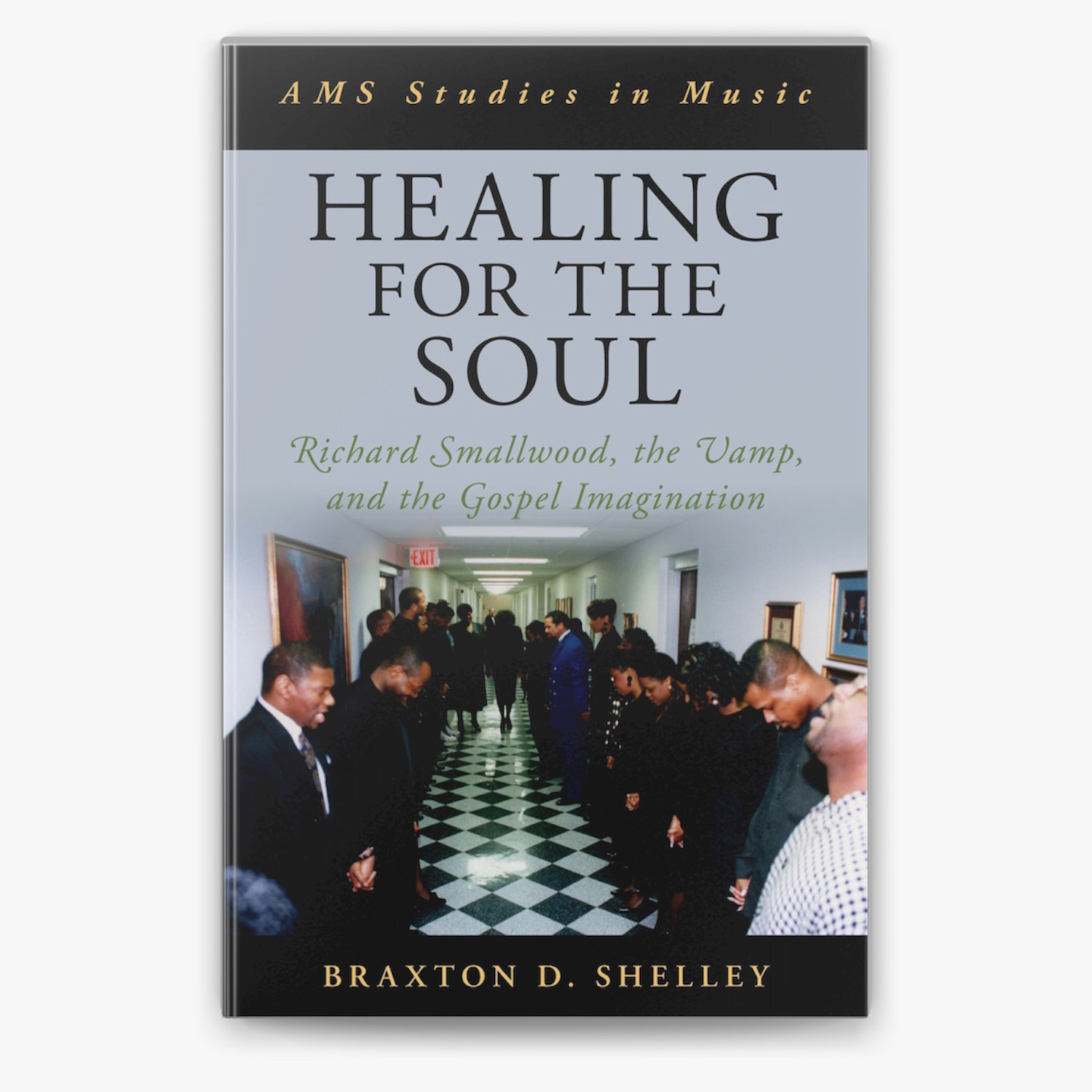

Healing for the Soul: Richard Smallwood, the Vamp, and the Gospel Imagination (2021)
“Between the first and last words of a Black gospel song, musical sound acquires spiritual power. During this unfolding, a variety of techniques facilitate musical and physical transformation. The most important of these techniques is a repetitive musical cycle known by names including the run, the drive, the special, and the vamp. Through its combination of reiteration and intensification, the vamp turns song lyrics into something more potent. While many musical traditions use vamps to fill space, or occupy time in preparation for another, more important event, in gospel, vamps are the main event. Why is the vamp so central to the Black gospel tradition? What work – musical, cultural, and spiritual – does the gospel vamp do? And what does the vamp reveal about the transformative power of Black gospel more broadly?
- Winner, Inaugural Portia Maultsby Prize, Society for Ethnomusicology
- Winner, 2022 Lewis Lockwood Award, American Musicological Society
- Winner, Emerging Scholar-Book Award, Society for Music Theory
- Winner, Ruth Stone Prize Society for Ethnomusicology
- “The depth of the author’s knowledge of gospel music, the vamp in particular, is evident throughout … Gospel music is more than a formula, and Shelley shows how the music is a channel to a worship experience. This is a valuable book for students of composition and for worship leaders, music therapists, gospel singers, and composers.” — V. S. Xenakis, CHOICE
- “Braxton D. Shelley’s Healing for the Soul is, beyond any doubt, the best book written on gospel music. It is the most theoretically sophisticated and existentially grounded analysis of how sonic vamps and tuning ups turn spiritual power from another world into physical reality and material effects. Shelley engages the profound works of the great Richard Smallwood as a way into the complex dynamics of time, space, sound, reception and belief in the enactment and embodiment of the gospel imagination. This instant classic forever changes modern scholarship in contemporary music and Black cultural performance!” — Cornel West, Harvard University
- “The ‘New Gospel Music Studies’ is here to stay, and Healing for the Soul is a shining example of why. With it, Braxton Shelley emerges as a leading and incisive voice of this exciting movement. This profound and illuminating book could only have been written by someone who’s spent years on the cultural frontline: in the pulpit, behind a Hammond B-3 organ, and immersed in the archives of gospel music’s history and lived experiences. If you’re looking for a musical, theological, and sociological explanation of the technology of gospel music’s preoccupation with transcendence, search no further. Healing for the Soul will ‘take you higher.” — Guthrie P. Ramsey, Jr, Edmund J. and Louise W. Kahn Term Professor of Music, University of Pennsylvania
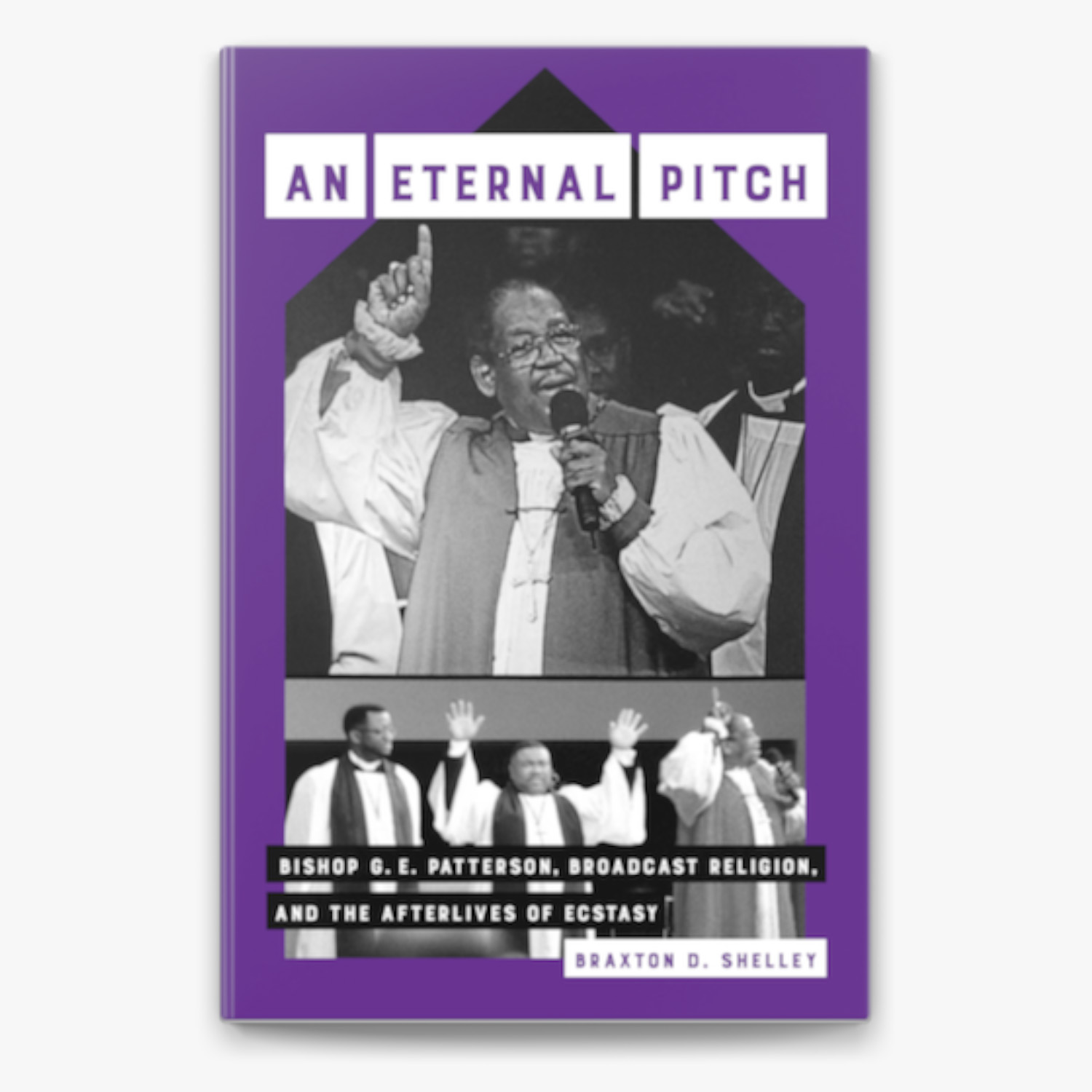
An Eternal Pitch: Bishop G.E. Patterson, Broadcast Religion, and the Afterlives of Ecstasy (2023)
“With fluid pen and discerning ear, An Eternal Pitch shows that broadcasting and recording need not be the enemy of the sacred: they can be its very vehicles. Bishop G. E. Patterson, a religious technophile of the first order, meets his perfect interpreter in Braxton Shelley, a scholar attuned to every nuance of prophetic pitch and transcendent technique.”—John Durham Peters, Maria Rosa Menocal Professor of English and of Film and Media Studies, Yale University.
“Uniquely groundbreaking in its analysis of media, Pentecostalism, and Black preaching, An Eternal Pitch reimagines the ways in which sonic techniques shape our relationship to spiritual and material worlds. Shelley’s deft theoretical interpretation of Bishop Patterson’s homiletic afterlife is a must-read, technical masterpiece for all those interested in how ‘Broadcast Religion’ has touched the lives of millions and reshaped a culture’s relationship to the divine.”—Marla Frederick, Asa Griggs Candler Professor of Religion and Culture, Candler School of Theology, Emory University
In the News
Yale University’s Braxton Shelley Wins Four Awards for His First Book
Braxton Shelley, an associate professor of music and sacred music at Yale Divinity School, has won four awards for his book Healing for the Soul: Richard Smallwood, the Vamp, and the Gospel Imagination (Oxford Univerity Press, 2021).
Faculty appointments, promotions, and honors
Braxton Shelley has been appointed to the newly endowed George Washington Williams(Link is external) Chair at YDS, named for the first African American to graduate from Newton Theological Institution (which continues today as part of Andover Newton Seminary at YDS).